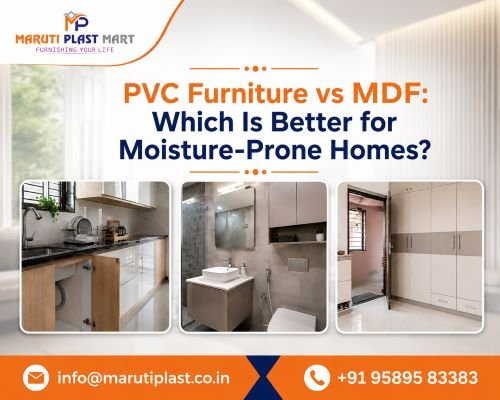
PVC Furniture vs MDF: Which Material Handles Moisture Better?
A cabinet installed near a kitchen sink may look perfectly fine when it is new. After repeated water splashes, steam and dampness, however, unsuitable material can start swelling at the edges or losing its finish. Similar problems are common in bathroom storage, utility areas and rooms affected by seepage.
This is why the PVC Furniture vs MDF comparison should not be based only on appearance or initial cost. Homeowners need to consider where the furniture will be installed, how often it may contact water and how much weight it needs to carry. Both materials have useful qualities, but they do not behave in the same way under moisture.
What Is PVC Furniture?
PVC furniture is manufactured using boards made from polyvinyl chloride-based material. Unlike wood-fibre boards, PVC boards have very low water absorption. They are commonly used for modular kitchen cabinets, bathroom vanities, under-sink cabinets, shoe racks and utility storage.
The material is also easy to wipe clean and does not require polishing. Since PVC does not provide a natural food source for termites, it is a practical option for homes that have experienced termite-related furniture damage.
However, PVC furniture quality depends heavily on board density, thickness, internal support and workmanship. A lightweight or low-density board may not be suitable for wide shelves or units carrying heavy loads.
What Is MDF Furniture?
MDF, or medium-density fibreboard, is an engineered board manufactured by compressing wood fibres with resin. Its smooth and even surface works well for paint, laminate, veneer and routed decorative designs.
MDF is often selected for bedroom furniture, decorative wall features,
TV units and other dry indoor applications. It can provide a refined finish at a controlled budget.
Standard MDF, though, can absorb water through exposed edges, damaged laminate or unsealed fitting points. Once moisture enters the board, it may swell or lose its original shape. Moisture-resistant MDF handles humidity and occasional dampness better than standard MDF, but moisture resistance should not be confused with complete waterproofing.
PVC Furniture vs MDF: Moisture Performance
PVC board does not absorb moisture like a wood-fibre board. This makes properly constructed PVC furniture suitable for places exposed to splashes, damp floors or regular humidity. MDF needs effective sealing and surface protection, especially around edges, hinges and cut-outs.
For example, an MDF cabinet can perform adequately in a dry bedroom. The same material may face problems when used below a leaking kitchen sink. Even a small plumbing leak can remain unnoticed inside the cabinet and expose the board to water for several days.
PVC is usually the safer choice for:
- Under-sink kitchen cabinets
- Bathroom vanities and storage
- Utility and wash-area cabinets
- Shoe racks placed near an entrance
- Ground-floor rooms affected by dampness
- Storage in humid or poorly ventilated spaces
Furniture should still be kept clean and dry where possible. Waterproof board does not make hinges, adhesives, fasteners or accessories immune to damage.
PVC vs MDF for Modular Kitchen Cabinets
A kitchen is exposed to steam, spills, wet cleaning and plumbing-related moisture. When comparing PVC vs MDF for modular kitchen furniture, divide the kitchen into wet and dry zones instead of treating every cabinet alike.
A PVC under-sink cabinet is useful because this area has the highest chance of leakage. PVC modular kitchen cabinets can also be considered near the sink, water purifier or floor-cleaning zone. MDF may be used in dry sections when its finish and design flexibility suit the project, provided the edges and cut-outs are sealed correctly.
Storage requirements matter too. Cabinets holding heavy utensils need appropriate board thickness, shelf spans and internal support. Material selection alone cannot compensate for weak construction.
Is PVC Better Than MDF for Bathroom Furniture?
For regular bathroom conditions, PVC generally has a clear moisture advantage. A PVC bathroom vanity or bathroom storage cabinet can handle humidity and occasional splashes better than standard MDF.
Placement remains important. The unit should not block ventilation or conceal an unresolved plumbing leak. Good-quality hinges and moisture-suitable hardware should also be selected, as metal accessories can corrode even when the cabinet board remains unaffected.
PVC vs MDF for Wardrobes and Dry Rooms
The answer becomes less one-sided when comparing PVC vs MDF for wardrobe construction.
In a dry, well-ventilated bedroom, MDF can be considered for its smooth finish and decorative flexibility. In a room with wall seepage, ground-floor dampness or high humidity, a PVC wardrobe may reduce concerns about board swelling and termites.
For wide wardrobes, lofts or heavily loaded shelves, buyers should ask about board density, back support, shelf reinforcement and hardware holding. The correct design is as important as the material name printed on the quotation.
How to Choose the Right Material for Your Home
Before placing an order, inspect the actual installation area and ask these questions:
- Is the furniture close to a sink, bathroom or wet floor?
- Has the wall shown seepage, fungus or damp patches?
- Will the shelves hold heavy utensils, books or appliances?
- Are exposed edges and plumbing cut-outs properly finished?
- Which board thickness and density will be used?
- Is the quoted material standard MDF, moisture-resistant MDF or PVC board?
- Are the hinges and fasteners suitable for the selected board?
Do not compare quotations by price alone. Furniture cost changes according to dimensions, board grade, thickness, internal layout, finish, hardware, accessories and installation complexity.
Choosing Furniture for Moisture-Prone Homes in Ahmedabad
Ahmedabad homes can face kitchen steam, bathroom humidity, monsoon dampness and hidden plumbing leaks. There is no need to use one board material in every room. MDF may suit selected dry-area furniture, while PVC is often more practical where moisture exposure is expected.
Maruti Plast designs
custom PVC furniture in Ahmedabad for kitchens, bathrooms, utility spaces, wardrobes, shoe racks and storage requirements. The design can be planned according to the available space, expected load and actual moisture conditions. Contact Maruti Plast to discuss which areas of your home genuinely need
PVC furniture before finalising the layout.
FAQs